Observation date: July 14, 2018
Submitted by: A_baldini
Specimen type: Photograph
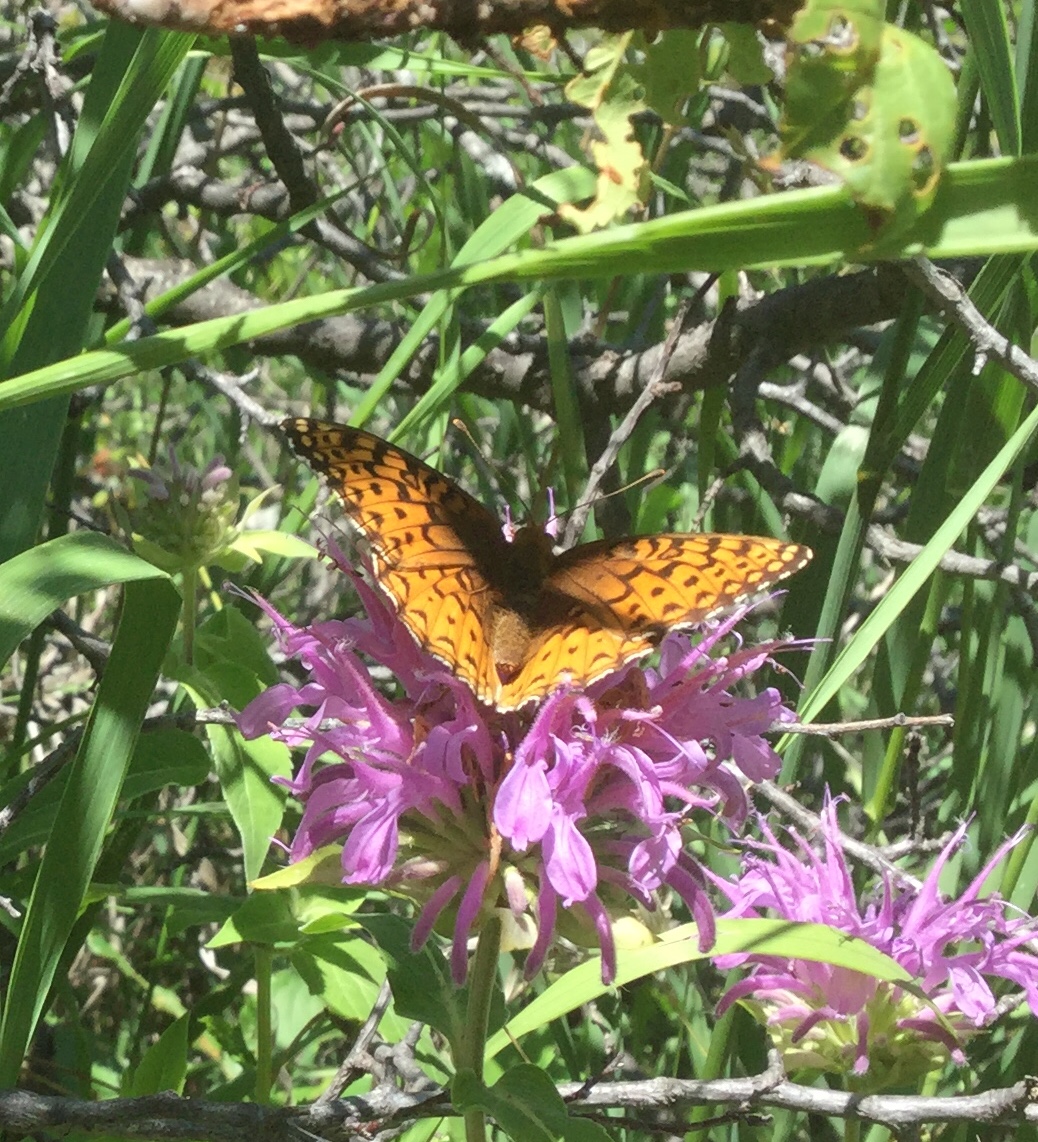
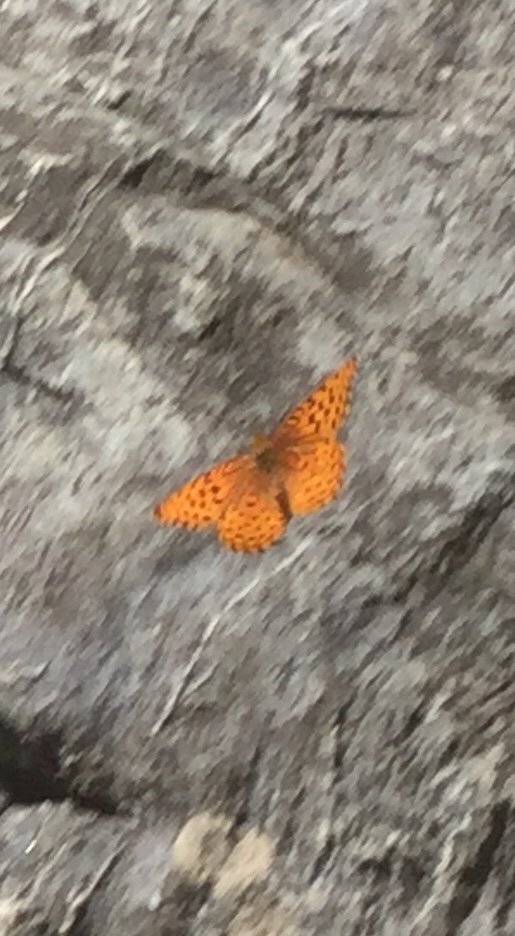
Observation notes: Time: 1:26 p.m. Weather: Hot, breezy, and sunny. Habitat: The border between a transitional ecotone and upland forest habitat (lots of conifers). Notes: These fritillaries were probably the most abundant butterfly around. Based on the larger size, different markings (both dorsally and ventrally), and overall more consistent orange color (no pale color on the dorsal forewing), I believe this is a different species of fritillary than my other submission. I suspect this is the species that the survey leader mistakes for the Northwestern Fritillary. In the coordinator notes field, could you provide a detailed description of the physical differences between this species (which I believe is Aphrodite) and the Northwestern Fritillary?
Status: Resident
Verified by: mikefisher
Verified date: September 10, 2018
Coordinator notes: Austin - you can always identify aphrodite by the color or its eyes (they are brown, not greyish-blue) but in this instance you can't really see the eyes clearly. The Northwestern Fritillary is a smaller species, the basal area on the upperside on males is darker than males of Aphrodite and the black markings are heavier (thicker). Along the foothills in eastern Colorado, the spots on the underside of both sexes of Aphrodite are always silvered but those of the Northwestern Fritillary are UNSILVERED. Occasionally at higher altitude you might find some Northwesterns on which the spots are partially silvered. Fully silvered examples east of the Continental Divide are rare. Mike